
By Global Consultants Review Team ,
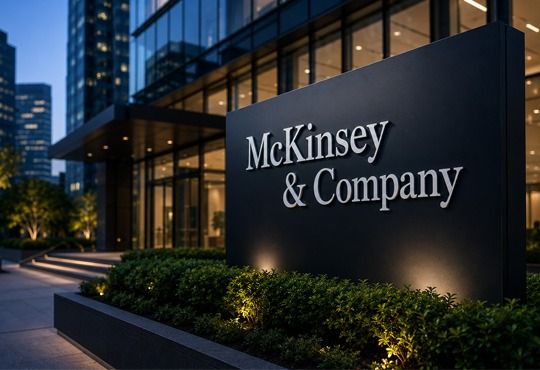
Global management consulting firm McKinsey & Company has announced one of the most significant governance reforms in its nearly 100-year history by separating the roles of board chair and global managing partner. The move is designed to strengthen oversight, improve accountability, and reinforce client confidence following several years of heightened scrutiny over the firm's past engagements.
Under the new governance structure, Andrew Pickersgill, a senior partner based in Toronto, has been appointed as the firm's first independent board chair. Previously, the global managing partner simultaneously led both the firm's executive operations and its board, concentrating leadership responsibilities within a single office. The new model introduces a clearer separation between management and governance, aligning McKinsey with governance practices commonly seen in large multinational corporations.
The firm's board has also been streamlined from 30 members to 13, creating a more focused decision-making body capable of providing stronger strategic oversight. According to McKinsey, discussions about reforming its governance began in 2023 as the consulting giant evaluated how to better manage a business that now employs roughly 40,000 people worldwide and serves clients across virtually every major industry.
Industry observers believe the governance overhaul comes at a critical time for the consulting sector. Clients increasingly expect consulting firms to demonstrate not only technical excellence in areas such as artificial intelligence, digital transformation, and sustainability, but also robust corporate governance and ethical standards. Strong governance has become an important differentiator as firms compete for large public-sector and enterprise transformation projects.
The announcement also reflects a broader trend across the consulting industry, where firms are modernizing leadership structures while investing heavily in AI capabilities and risk management. As consulting engagements become larger and more technology-driven, firms are facing greater expectations from regulators, shareholders, and clients regarding transparency and accountability.
Analysts suggest that McKinsey's governance changes could influence other global consulting firms to reassess their own leadership models. While the partnership structure remains unchanged, the new framework is expected to provide greater independence in oversight and improve long-term strategic decision-making as the firm navigates rapid changes driven by artificial intelligence and global business transformation.
We use cookies to ensure you get the best experience on our website. Read more...



.jpg)